
All case studies
Anonymized customer project
CASE STUDY FROM the Packaging Industry
A 25-year-old machine, a manufacturer that no longer exists, 17 components
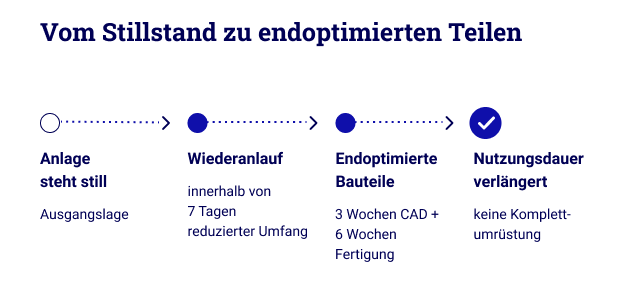
Back in operation within seven days, with reduced scope
With no manufacturer, no supply channel and no complete documentation, the machine was at a standstill. Depending on the component, the parts were produced from drawings, by measurement or through CAD reconstruction.
When the original manufacturer no longer exists, copying is not the only option.
Initial situation
The customer operates packaging machines that have been in use internationally for more than 25 years. The original manufacturer no longer exists, so there is neither a supply channel nor complete documentation. By the time J&K was brought in, the machine was already at a standstill.
Objectives
- Get the machine back into operation as quickly as possible
- Reproduce 17 components without complete documentation
- Where it makes sense, improve on the original instead of copying its weaknesses
- Secure fixed annual call-off orders as soon as the design is finalized
J&K's role
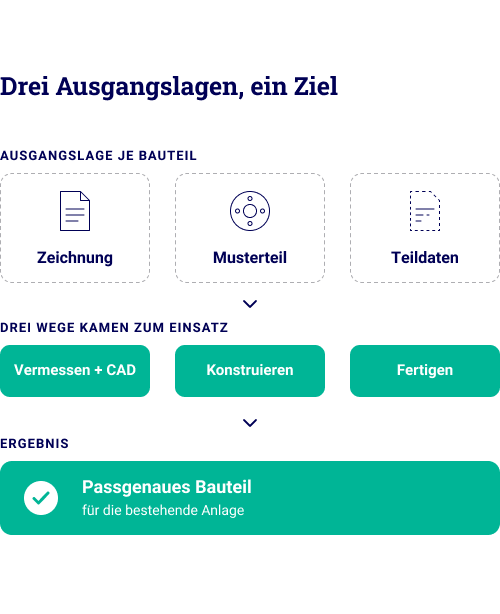
J&K coordinated the entire process: assessing the existing documentation, measurement and CAD reconstruction where it was missing, design for manufacturability and material selection, through qualified network partners, with a single point of contact for the customer.
Solution
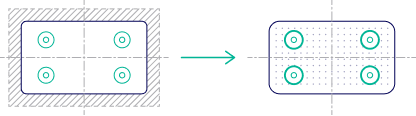
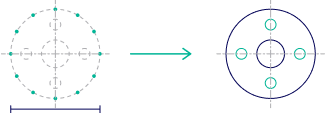
The starting point differed for each component: for some there were drawings, for others only a sample part, and for others incomplete legacy data. All three approaches were used: measurement and in-house CAD reconstruction, CAD design optimized for manufacturing, and production from existing drawing data after adaptation to modern materials.
Materials were selected anew for each component rather than carried over from the original: stainless steels, aluminum and engineering plastics including PEEK, chosen based on what each part has to deliver in the machine today.
Quality assurance
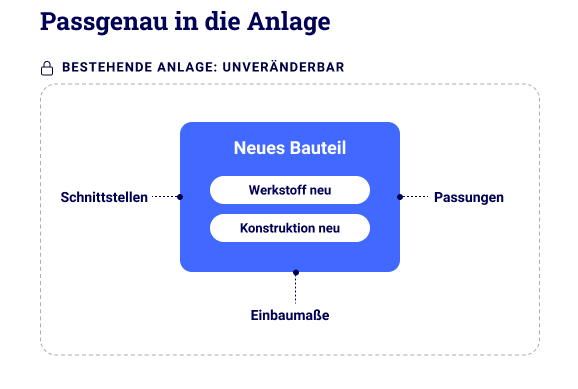
The decisive factor was an exact fit with the existing machine. Interfaces, fits and installation dimensions were treated as fixed constraints throughout: the parts had to fit into an installation that cannot be modified.
Result
The machine was back in operation with reduced scope within seven days. The fully optimized components followed after around three weeks of CAD design and six weeks of production. The machine's service life was extended without a short-term complete retrofit.
Conclusion
Several of the 17 components were improved over the original: switched to modern materials or redesigned for manufacturability. A reconstruction is also an opportunity to eliminate a known weak point.
Services and materials used
FAQs
What happens when the original manufacturer no longer exists?
The component is reconstructed from whatever basis is available. In this project, all three approaches were used: measurement and CAD reconstruction, redesign optimized for manufacturing, and production from existing drawing data after adaptation to modern materials.
Is this reverse engineering?
In this project, yes: components were measured and reconstructed in CAD where no usable documentation was available. Where drawings existed, it was a matter of redesign and material adaptation rather than reconstruction.
How quickly can a machine at a standstill be restarted?
That depends on how much of the machine needs to run. Here, a restart with reduced scope was possible within seven days, with the fully optimized components following in the weeks after.
-
Schematic illustration
-
Schematic illustration 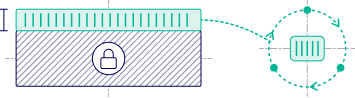
-
Schematic illustration 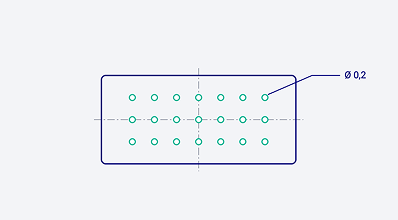
Planning a similar project?
Send us your drawing via GP-Digit and you will usually receive a binding quote on the next business day. Every inquiry is technically reviewed before a quote is prepared.