Optics
Turned mounts and adapters for holding optical components.
In CNC turning, we procure classic turned parts as well as complex mill-turn parts through our qualified manufacturing network. These include shafts, bushings, sleeves, bolts, flanges, rings, and rotationally symmetric precision parts with cross holes, milled faces, or demanding internal contours.

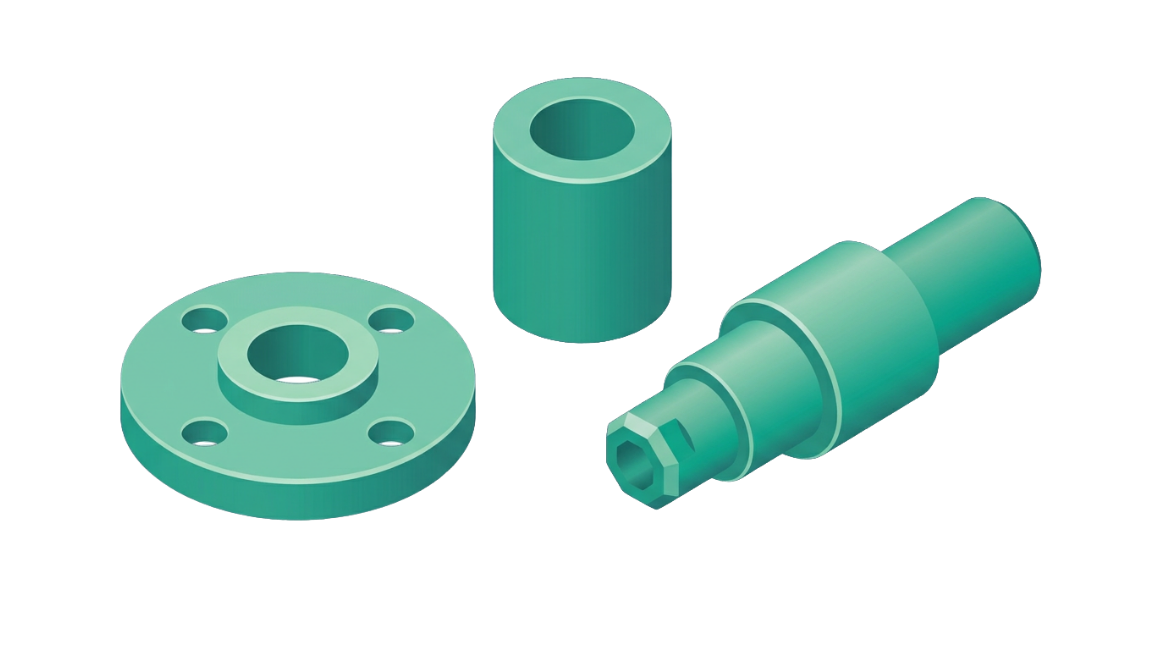
Achievable diameter, runout and coaxiality tolerances depend on material, geometry, dimensions and process — we deliberately don't promise blanket extreme values.
Turned mounts and adapters for holding optical components.
Turned axes, bushings, and connecting elements for robotics and positioning applications.
Turned shafts, bushings, flanges, and spacers for production and packaging plants.
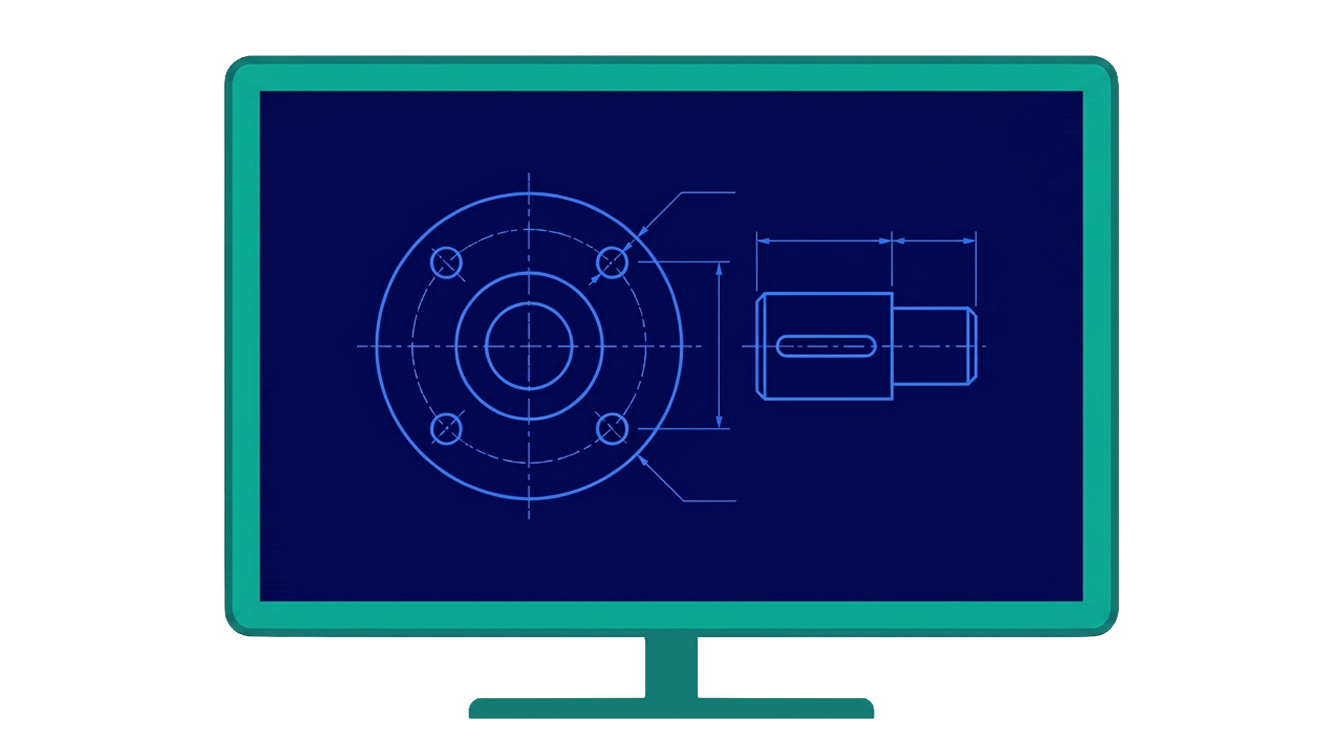
From 3-axis components to complex 5-axis geometries — our network delivers milled parts with tight tolerances, clean contours and accurate hole patterns. Upload your drawing and get expert advice.
Frequently Asked Questions
CNC turning is a machining process in which the workpiece rotates and a computer-controlled tool removes material. It's especially suited to rotationally symmetric parts like shafts, bushings, and flanges — with high dimensional and concentricity accuracy.
In turning, the workpiece rotates and the tool is stationary — ideal for rotationally symmetric shapes. In milling, the tool rotates and the workpiece is fixed — ideal for prismatic parts and complex surfaces. Mill-turn machining combines both in a single setup.
Mill-turn parts are both turned and milled in a single setup. This allows rotationally symmetric base shapes with additional milled faces, cross holes, or grooves — without repositioning, which improves accuracy and efficiency.
Typical turned parts are shafts, bushings, sleeves, bolts, flanges, rings, and spacers. Mill-turn machining adds more complex geometries with cross holes, milled faces, and internal contours.
Cost depends on geometry, material, tolerances, machining time, and quantity. Through our digital quoting system GP-Digit, based on your drawing, you'll typically receive a firm, binding quote within 24 hours.
Typically within 24 hours. Through our digital quoting system GP-Digit you send us your drawing data — via the request form or e-mail (info@jk-cnc-technik.de) — and receive a binding quote the next business day.
We orchestrate a network of carefully selected, highly specialized manufacturing partners in Germany and internationally. As your central procurement partner, we accompany the entire process from consulting to on-time delivery.